How to fade dark spots and hyperpigmentation on dark skin

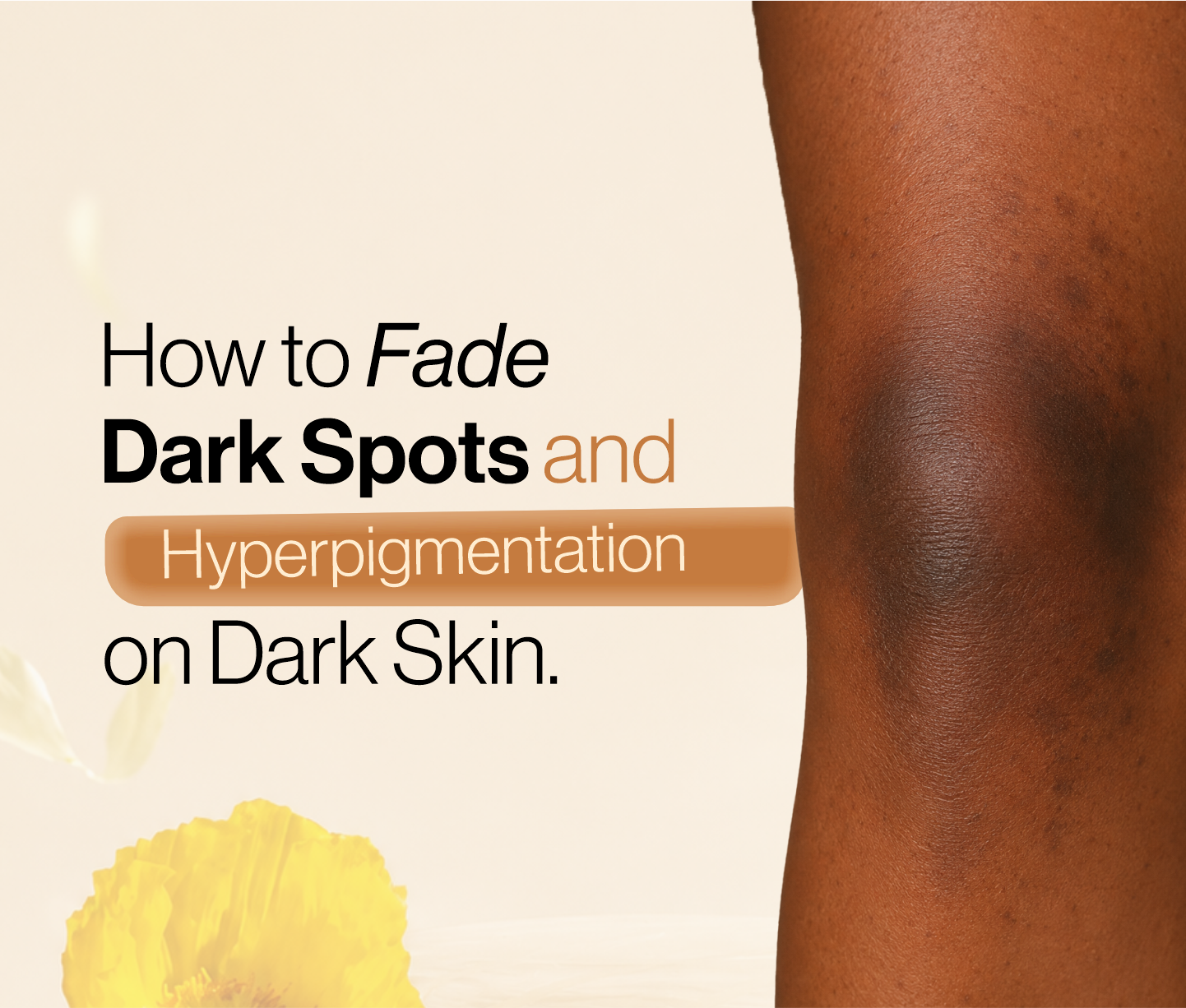
If you have dark skin, you already know the frustration. A pimple clears up and leaves behind a mark that stays for months. You get a small cut, a little friction, or even just a rash, and the aftermath lingers on your skin long after the original problem is gone.

Dark spots and hyperpigmentation are one of the most common skin concerns for people with deeper skin tones. And yet so much of the skincare advice out there is written as if melanin-rich skin doesn’t exist.

This guide is for you. 

First, Why Does Dark Skin Get Hyperpigmentation More Easily?

It comes down to melanin.

Melanin is the pigment that gives skin its colour, and the more melanin your skin produces, the deeper and richer your complexion. It’s also one of the things that makes dark skin naturally more resilient and slower to show certain signs of ageing.

But here’s the trade-off. Melanin-producing cells called melanocytes in darker skin tones are more active and more reactive. When your skin experiences any kind of trauma or inflammation, a breakout, a cut, sunburn, even aggressive scrubbing, those melanocytes go into overdrive and produce excess pigment at the site of the irritation.

The result? A dark mark that sits on the skin long after the original issue has healed. This is called post-inflammatory hyperpigmentation, or PIH and it is extremely common in darker skin tones.

Understanding this is important because it changes how you treat it. The goal isn’t just to fade existing spots, it’s to calm inflammation quickly before it has the chance to leave a mark in the first place.

What Causes Dark Spots on Dark Skin?

Dark spots don’t come from nowhere. Here are the most common triggers:

Acne and breakouts;  the most common cause of PIH on dark skin. Even small pimples can leave behind pigmentation that takes weeks or months to fade.

Sun exposure; UV rays stimulate melanin production. Without SPF, existing dark spots get darker and new ones appear faster.

Friction; tight clothing, rough towel drying, or aggressive scrubbing can all trigger inflammation that leads to dark patches especially on the knees, elbows, and inner thighs.

Hormonal changes; pregnancy, birth control, and hormonal shifts can cause melasma, a specific type of hyperpigmentation that shows up as symmetrical patches, often across the cheeks and forehead.

Ingrown hairs; common after shaving or waxing, and they almost always leave a dark mark behind.

Harsh skincare products; products that are too stripping or contain irritating ingredients can cause inflammation and trigger excess pigmentation, particularly on reactive skin.

The Ingredients That Actually Work

Vitamin C
One of the most powerful brightening ingredients available. Vitamin C inhibits the enzyme responsible for melanin production, which means it actively slows down the process that creates dark spots in the first place. It also works to fade existing pigmentation over time and protect the skin from the UV-triggered damage that makes spots darker. Look for stabilised forms like 3-O-Ethyl Ascorbic Acid for better penetration and longer shelf life.

Niacinamide (Vitamin B3)
Niacinamide is the multitasker. It doesn’t bleach skin, instead it interferes with the transfer of pigment to the surface of the skin, which gradually reduces the appearance of dark spots and uneven tone. It also strengthens the skin barrier, reduces inflammation, and minimises pores making it an ideal ingredient for anyone dealing with acne-related hyperpigmentation.

Licorice Extract
A gentle but effective botanical brightener. Licorice contains an active compound called glabridin, which blocks the enzyme that triggers melanin overproduction without irritating the skin. It’s particularly well suited to sensitive and reactive skin types.

Vitamin A (Retinol / Retinyl Palmitate)
Vitamin A speeds up cell turnover, the process by which your skin sheds old, pigmented cells and replaces them with fresher ones. The result over time is a more even, brighter complexion. Start slowly and always use SPF when incorporating Vitamin A into your routine.


What To avoid

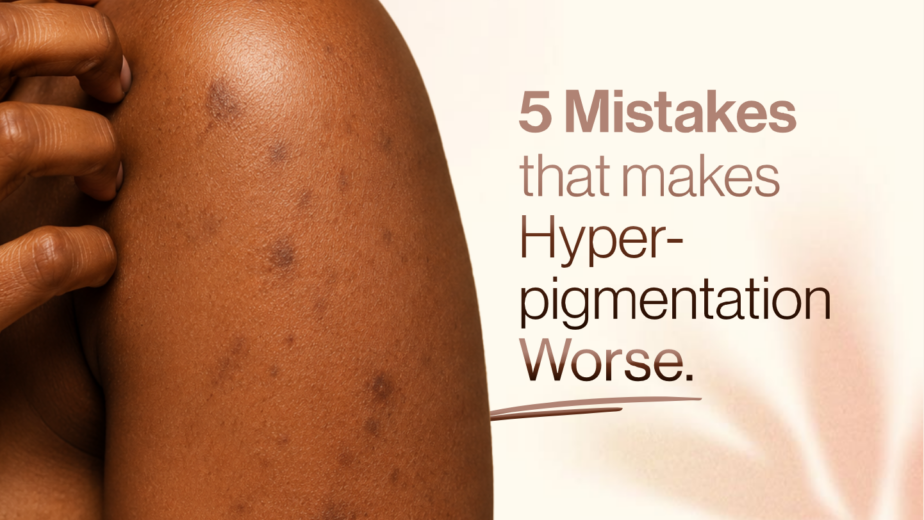
A few things that make hyperpigmentation on dark skin worse:

Picking, squeezing, or scratching; every time you pick at a spot, you create new inflammation, which creates a new dark mark. Leave it alone.

Skipping SPF; there is simply no point investing in brightening actives if you’re not protecting the progress with sun protection every day.

Over-exfoliating;  more is not more when it comes to exfoliation. Over-doing it irritates the skin, weakens the barrier, and triggers more PIH.

Harsh, stripping cleansers;  if your skin feels tight after cleansing, your cleanser is too harsh. A compromised skin barrier is inflamed skin, and inflamed skin on deep tones means more pigmentation.

Impatience;  this is perhaps the hardest one. Hyperpigmentation on dark skin can take anywhere from a few weeks to several months to fade, depending on how deep the pigmentation is. Consistency is everything. Trust the routine and give it time.

Sale!